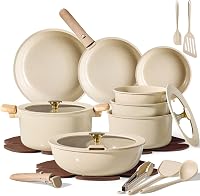
How to Use and Care for Ceramic Cookware
Use ceramic cookware over low to medium heat, with a little oil and utensils approved for the coating. Let pans cool before washing, clean them gently, and follow the care instructions for your set.
On this page (7 sections)
- How do you use ceramic cookware without damaging it?
- Which utensils are safe for ceramic cookware?
- How should you clean ceramic cookware?
- Can ceramic cookware go in the oven or dishwasher?
- How do you store ceramic pans?
- What should you avoid with ceramic cookware?
- Is ceramic cookware right for your kitchen?
To use ceramic cookware, cook over low to medium heat, add a little oil as needed, and use utensils approved for the surface. Let each pan cool before cleaning it gently, and check its care instructions for specific limits.
Ceramic nonstick cookware still needs careful use. High heat, rough cleaning and sudden temperature changes can damage the cooking surface.
How do you use ceramic cookware without damaging it?
Use ceramic cookware over low to medium heat and let it warm gradually. Follow your set's care guide rather than using the high heat you might choose for uncoated stainless steel.
Add a small amount of oil or butter if your recipe needs it. Avoid heating an empty pan for a long time, and lower the heat if oil starts to smoke.
Before cooking, match the pan to the burner so the flame or heating element doesn't extend far beyond its base. For a new set, check the brand's instructions for compatible stovetops and any heat limits.
Which utensils are safe for ceramic cookware?
Silicone or wooden utensils are a careful everyday choice when approved for your cookware. Avoid sharp edges and dragging metal tools across the coating unless your cookware's instructions allow metal utensils.
GreenPan Chatham is metal utensil safe, though GreenPan recommends silicone tools. The Umite Chef 33-Piece Silicone Utensil Set gives you options for stirring, turning and serving.
The handle on a utensil matters too. Umite Chef does not recommend long soaking or dishwasher cleaning for this set's wooden-handled tools.
How should you clean ceramic cookware?
Let the pan cool before washing, then use warm water, dish soap and a soft sponge. Avoid abrasive pads or powders, and loosen stuck food with a short soak if your care instructions allow it.
Dishwasher compatibility varies, and hand washing may still be recommended. GreenPan Chatham is dishwasher safe, but GreenPan recommends hand washing.
Dry the pan before putting it away. If you stack pans, place a soft protector between them to limit scratches from contact.
Can ceramic cookware go in the oven or dishwasher?
Oven and dishwasher limits depend on the set and its parts, so follow the care instructions for your exact cookware. Handles and lids can have different heat limits from the pans.
GreenPan Chatham pans are oven and broiler safe up to 600°F, while the glass lids are oven safe up to 425°F. The Carote 25-Piece Ceramic Set is oven and dishwasher compatible; follow its instructions for detachable handles and other parts.
If you are comparing the safety wording on ceramic coatings, read what ceramic cookware safety labels mean. A coating's material claims don't replace the instructions for heat, cleaning and use.
How do you store ceramic pans?
Store ceramic pans with a soft layer between stacked pieces so their cooking surfaces don't rub against other pans. Use pan protectors or a soft cloth, and avoid dropping cookware into a crowded cabinet.
The Carote 25-Piece Ceramic Set includes 7 pan protectors and 2 detachable handles for stacking and storage. It's compatible with induction, gas and electric stovetops.
If you are choosing a set, compare its included pieces with the pots and pans you actually use. Our guide to cookware set sizes explains what common piece counts include.
What should you avoid with ceramic cookware?
Avoid excess heat, sharp tools and abrasive cleaning to help protect the coating. Check your set's instructions before changing how you cook with or clean it.
- Heating an empty pan for a long time or using high heat beyond the care guide's advice.
- Cutting food in the pan or scraping it with a sharp tool.
- Putting a hot pan straight into cold water.
- Using abrasive scrubbers or cleaners.
- Stacking pans without a soft layer between them.
- Ignoring the care instructions for lids, handles or detachable parts.
A set's material and stovetop fit can also affect your choice. See ceramic cookware compared with stainless steel to compare how the two materials suit different cooking routines.
Is ceramic cookware right for your kitchen?
Ceramic cookware can suit cooks who want a nonstick surface and are comfortable using moderate heat and gentle cleaning. Choose based on your stove, the pieces you need and the care steps you are willing to follow.
The Sensarte 14-Piece Ceramic Set is induction compatible and includes 2 utensils and 4 pot protectors. Sensarte recommends hand washing and using plastic or silicone utensils with the cookware.
Choose detachable handles if stacked storage matters, or compare pan and lid heat limits if oven use is a priority. Our best ceramic cookware sets guide can help you choose a set that fits how you use ceramic cookware.
Frequently asked questions
What heat should you use with ceramic cookware?
Use low to medium heat for most ceramic cookware, and check the care guide for your specific set. High heat is usually unnecessary for everyday nonstick cooking.
If food browns too fast or oil starts to smoke, lower the burner and let the pan cool.
Can you use metal utensils on ceramic cookware?
Use silicone, wood or other utensils approved by the cookware brand to help protect the coating. GreenPan Chatham is metal utensil safe, but GreenPan recommends silicone tools.
Check your own set's instructions before using metal, and avoid cutting food in the pan or scraping its surface.
How do you clean ceramic cookware?
Let the pan cool, then wash it with warm water, dish soap and a soft sponge unless its instructions say otherwise. Avoid abrasive pads and sudden temperature changes.
Even if a set is dishwasher safe, hand washing may be recommended as part of its care routine.
Do you need oil with ceramic cookware?
A small amount of oil or butter can add flavor and help with browning, even on a nonstick ceramic surface. Follow the care guide about suitable oils and avoid overheating them.
Don't use cooking spray unless the cookware brand says it's suitable, since residue can build up.