Is Ceramic Cookware Safe? What the Labels Say
Ceramic nonstick cookware can be a reasonable choice when you follow its use and care instructions. A PFAS-free claim addresses specific substances, but it isn't a guarantee of overall safety.
On this page (7 sections)
Ceramic nonstick cookware can be a reasonable choice when you follow its use and care instructions, but a ceramic label alone doesn't establish safety. “Ceramic” often describes a nonstick coating on a metal pan, not a pot made entirely from ceramic.
The key is to read the exact claim. “PFAS-free” addresses a specific group of substances, and it doesn't mean a product is free of every chemical or guarantee overall safety.
Is ceramic cookware safe?
Ceramic nonstick cookware can suit everyday cooking, but materials and use instructions matter more than the word “ceramic.” Check the coating claims, heat limits and care guidance for the pan you're considering.
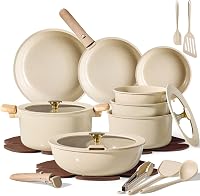
Many ceramic cookware sets use a coating over a metal body, often aluminum. That differs from bare ceramic cookware, which is made from ceramic material throughout.
Check the pan's materials and care guidance before deciding.
If you're comparing materials, our guide to ceramic versus stainless steel cookware explains how the two options differ.
What does “PFAS-free” mean on ceramic cookware?
“PFAS-free” addresses a group of substances, not every possible chemical or material. Some brands specify that their coating is made without intentionally added PFAS, which is narrower than a claim that no PFAS is present.
Look for the exact wording and the substance names. A claim about a coating doesn't necessarily cover every component of a pan.
For example, GreenPan says its Chatham ceramic nonstick coating is made without intentionally added PFAS. CAROTE describes its ceramic set as made without PFAS, PFOA, PFOS and PTFE.
Those statements describe each brand's claims; they don't establish that every ceramic pan has the same formulation.
Is ceramic the safest cookware?
There isn't enough information in a material's name alone to call it the safest cookware. Compare the materials, coating claims and care instructions for the specific cookware you're considering.
Ceramic nonstick appeals to cooks who want food release from a coated pan. Uncoated stainless steel has no nonstick coating, while other cookware types have their own material and care considerations.
Our complete cookware set guide can help you compare the main options.
The phrase “safest cookware” can also blur different questions. A coating claim, the pan's heat limits and the way you care for it each matter, so check them separately instead of relying on a single broad promise.
How can you read ceramic cookware labels?
Read the material, coating and care guidance together, then check that they match your stove and cooking habits. A label is most useful when it names the substances addressed and gives practical use instructions.
What should you check when judging ceramic cookware safety?
Check the coating claim, pan body, stove compatibility and use limits together. No single label answers every safety question.
Before you choose, look for:
- Coating claim: Does it say ceramic nonstick, and does it name substances such as PFAS, PFOA, PFOS or PTFE?
- Pan body: Is the pan aluminum, stainless steel or another material beneath the coating?
- Stovetop fit: Check compatibility, especially if you cook on induction.
- Care instructions: See whether hand washing or particular utensils are recommended.
- Heat limits: Check the pan and lid limits separately if you plan to use them in an oven.
These differences affect which set fits your kitchen. GreenPan's Chatham set works on gas and electric stovetops but not induction, while the CAROTE and SENSARTE sets are induction compatible.
What care helps protect a ceramic coating?
Follow the care instructions for your specific set, since utensil and cleaning guidance can vary. Avoid assuming that every ceramic coating has the same limits.
GreenPan recommends silicone tools for its Chatham set, although it also describes the coating as metal utensil safe. SENSARTE recommends hand washing, and CAROTE says its set can be washed by hand or in a dishwasher.
GreenPan's Chatham pans are oven and broiler safe up to 600°F, while their glass lids are oven safe up to 425°F. Don't apply those limits to another set.
For more day-to-day tips, read how to use and care for ceramic cookware. If you want to compare a coated option with steel, our stainless steel versus nonstick guide covers that decision.
Ceramic sets to consider
These sets offer different stove and care options, so choose around your cooking habits rather than a broad safety promise. Their coating claims don't establish that one is safer than the others.
Is ceramic cookware right for your kitchen?
Ceramic nonstick may fit if you want a coated pan and are comfortable following its care instructions. To decide whether ceramic cookware is a suitable choice, compare the exact coating claim, stove compatibility and heat limits.
Choose Chatham if you use gas or electric and need its stated oven limits, CAROTE if detachable handles matter, or SENSARTE if you want induction compatibility with a 6.5-quart casserole. Compare the options in our best ceramic cookware sets guide.
Frequently asked questions
Is ceramic cookware safe for everyday cooking?
Ceramic nonstick cookware can be a reasonable choice for everyday cooking when you follow its use and care instructions, but the name alone doesn't establish safety. “Ceramic” often means a ceramic-based coating on a metal pan, so compare the materials, heat limits and specific coating claims.
Does PFAS-free mean a pan has no chemicals?
No. PFAS-free addresses a particular group of substances; it doesn't mean a pan contains no chemicals.
Some brands use the narrower wording “made without intentionally added PFAS,” so read the exact claim and don't treat it as a guarantee about every material or component.
Is ceramic cookware safer than nonstick cookware?
There isn't one answer based on the word “ceramic” alone, because ceramic nonstick is itself a type of nonstick cookware. Compare the stated coating materials, the specific substances addressed and the use instructions for each pan rather than treating ceramic as a blanket safety guarantee.
When should I replace ceramic nonstick cookware?
Consider replacing a pan when its coating is peeling, flaking or badly damaged, and follow the care instructions for your set. Gentle utensils and cleaning can help avoid scratches, but check the brand's guidance if you're unsure whether a damaged pan should stay in use.