How to Use Stainless Steel Cookware Correctly
Preheat stainless steel cookware over medium heat, add oil, then place dry food in the pan. Let it brown before you try to turn it; food often releases more easily once a crust forms.
On this page (10 sections)
- How do you use stainless steel cookware correctly?
- Why does food stick to stainless steel cookware?
- How should you preheat a stainless steel pan?
- When should you add oil to stainless steel cookware?
- How do you keep food from sticking while it cooks?
- How do you cook eggs in stainless steel without sticking?
- What should you do if food is already stuck?
- How do you clean stainless steel cookware after cooking?
- Which stainless steel cookware features help with even cooking?
- Use steady heat and give food time to release
To use stainless steel cookware correctly, preheat over medium heat, add oil, then cook dry food without moving it too soon. When a browned crust forms, food often releases more easily.
Sticking can happen when a pan is too cool, the food is wet, or you try to turn it too soon. A few small changes to the order of cooking can make stainless steel easier to use.
How do you use stainless steel cookware correctly?
Use this order: warm the pan, add oil, add dry food, then let it cook before moving it. Medium heat is a practical starting point for many foods.
- Set the pan over medium heat and let it warm briefly, following its care instructions.
- Add oil and swirl it to coat the cooking surface.
- Pat food dry, then place it in the pan.
- Let it cook until browned or set before you try to turn or lift it.
- Lower the heat if food browns too fast; turn off the heat if oil starts smoking.
Don't leave an empty pan heating unattended. Cooking times and heat settings vary by stove, pan and food, so stay nearby and adjust as you go.
Why does food stick to stainless steel cookware?
Food can stick when you move it before it browns or sets, or when it goes into a cool or crowded pan. Moisture on the food can also slow browning.
Give meat, fish or eggs time to cook before you test whether they move. If you pull too soon, the surface may tear and leave food behind.
Crowding the pan traps moisture and cools the cooking surface. Cook in batches when needed, leaving space around each piece.
How should you preheat a stainless steel pan?
Preheat briefly over medium heat, following your cookware's instructions, and add oil once the pan is warm. A moderate setting gives you more control than starting on high.
A water-drop test isn't required to cook with stainless steel. Never add water to hot oil, and make sure the pan is dry before adding oil.
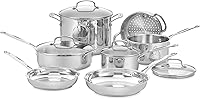
Stainless steel pans vary in construction and heat response. The Cuisinart Chef's Classic 11-Piece Stainless Set has an aluminum-encapsulated base, while the Tramontina Signature Tri-Ply Clad 11-Piece Set has an aluminum core throughout the pan.
For a broader look at materials and set choices, see our stainless steel cookware set guide.
When should you add oil to stainless steel cookware?
Add oil after the pan is warm, then add food once the oil has spread across the surface. If the oil smokes, turn off the heat and let the pan cool before continuing.
Use enough oil to lightly coat the cooking area. You don't need a deep pool for everyday sautéing, but a very thin or patchy coating may leave dry spots where food can stick.
How do you keep food from sticking while it cooks?
Dry food and give it space when it goes into the pan. Patting meat or fish with a paper towel removes surface moisture that can delay browning.
Let the first side cook undisturbed, then gently test whether it lifts. If it resists, wait a little longer, adjusting the heat if it starts to scorch.
Use a spatula to help release food once it has browned. The Viking 8-Piece Stainless Utensil Set includes solid and slotted stainless steel spatulas for turning and lifting.
How do you cook eggs in stainless steel without sticking?
Use a warm pan, enough fat and moderate heat for eggs. Add the eggs after the pan and fat are ready, then give them time to set before moving them.
Eggs can be less forgiving than foods that form a browned crust. If you often cook eggs or delicate fish, compare the surfaces in our stainless steel vs nonstick guide.
What should you do if food is already stuck?
Lower the heat and wait briefly before trying to lift the food again. If it still sticks, gently slide a spatula under the edge instead of scraping forcefully.
Release from the pan doesn't tell you whether food is fully cooked. Use a food thermometer where needed rather than judging doneness by browning alone.
After cooking, let the pan cool, then soak it in warm water to loosen stuck-on food. Use a sponge or a non-abrasive scrubber, and follow the care instructions for your cookware.
How do you clean stainless steel cookware after cooking?
Let the pan cool before washing, then use warm soapy water and a soft sponge. For stuck-on residue, soak the pan first so you can clean it without harsh scraping.
The Cuisinart Chef's Classic 11-Piece Stainless Set and Calphalon Classic 10-Piece Stainless Set are dishwasher safe. The Tramontina Signature Tri-Ply Clad 11-Piece Set is also dishwasher safe, though Tramontina recommends hand washing to help maintain its polished finish.
For more on cleaning and care, read how long cookware sets last and our complete cookware set guide.
Which stainless steel cookware features help with even cooking?
An aluminum base or core helps spread heat across the cooking surface. Construction alone doesn't replace heat control, so start at medium and adjust based on how quickly your food browns.
The Calphalon Classic 10-Piece Stainless Set has an impact-bonded aluminum base. The Tramontina Signature Tri-Ply Clad 11-Piece Set has an aluminum core throughout the pan, rather than only in the base.
Compare the best stainless steel cookware sets if you're choosing a set and want to compare construction and included pieces.
Use steady heat and give food time to release
To use stainless steel cookware correctly, match the heat to the food and let each side brown or set before turning. If food resists, give it more time while watching for scorching.
Choose stainless steel if you're willing to manage heat and timing. If easier release for eggs or delicate fish matters most, compare the options in our stainless steel vs nonstick guide.
Frequently asked questions
How do you stop food from sticking to stainless steel cookware?
Preheat the pan over medium heat, add oil, then add dry food without crowding the cooking surface. Give the food time to brown before turning it, since it may release more easily once a crust forms, and lower the heat if it starts scorching.
Should you heat stainless steel before adding oil?
Yes, briefly warm the empty pan over medium heat, following its care instructions, then add oil and swirl it around before adding food. This helps the oil coat the cooking surface, but don't leave an empty pan heating unattended or let it get excessively hot.
What temperature should you use for stainless steel cookware?
Medium heat is a useful starting point for many stovetop tasks, but the right setting depends on the food, pan and burner. Lower the heat if food browns too quickly; if oil starts smoking, turn off the heat and let the pan cool before continuing.
Can you use stainless steel cookware on low heat?
Yes, low heat suits gentle tasks such as slowly cooking delicate food, though the setting alone doesn't confirm a safe food temperature. For browning, start at medium and adjust as needed, following the cookware and stove manuals because handle and oven limits vary by set.