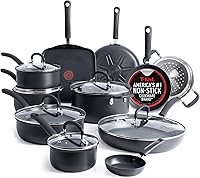
Cookware Sets: The Complete Buying Guide
The right cookware set has the pans you use often, a material that suits your cooking and bases that work with your stove. Check the actual vessels, oven limits and care needs before comparing piece counts.
On this page (10 sections)
- Which cookware set material should you choose?
- How many pots and pans do you need?
- Will the cookware set work on your stove?
- What do oven-safe limits really mean?
- Does dishwasher safe mean hand washing is unnecessary?
- How long should a cookware set last?
- How to compare cookware brands and collections
- How to choose a cookware set without wasting cabinet space
- Using your new cookware set safely
- The best cookware set for your kitchen
The right cookware set gives you the pans you will use, works with your stove and matches the way you cook. Material matters more than a large piece count because stainless steel, traditional nonstick and ceramic-coated cookware handle food and care differently.
Start with the vessels, not the number on the box. A lid or utensil may count as one piece, so list the skillets, saucepans and larger pots you actually receive before you compare two sets.
This guide explains those choices from the ground up. If you already know your needs, our best cookware sets roundup compares complete sets directly.
Which cookware set material should you choose?
Choose stainless steel for browning or a nonstick surface for easy release. Hard-anodized aluminum is a body material that can sit beneath either a traditional nonstick or ceramic coating.
No material wins every task. Think about the meals you cook each week, the heat you use and how much care you are willing to give the pans.
Stainless steel cookware sets
Stainless steel is a useful choice for searing, browning, simmering and oven cooking within the set's temperature limits. Heat control, preheating and cooking fat matter when you want to keep food from sticking.
Many stainless sets use aluminum in the base or body to spread heat. The Cuisinart Chef's Classic 11-Piece Stainless Set, for example, has stainless steel cookware with an aluminum-encapsulated base.
The set includes 1.5 qt and 2.5 qt saucepans with glass covers, a covered 3 qt pan with a helper handle, and an 8 qt stockpot with a glass cover. It also has 8 in and 10 in skillets and a steamer insert.
Cuisinart gives the cookware a 500°F oven limit and permits broiler use. Confirm the separate limits for glass covers before putting them in the oven or under direct broiler heat.
Read our best stainless steel cookware sets guide for more options. If sticking is your main concern, how to use stainless steel cookware correctly covers preheating, oil and temperature control.
The choice between bare metal and a coated surface affects daily cooking more than brand alone. Our stainless steel versus nonstick cookware comparison explains where each type is easier to use.
Traditional nonstick cookware sets
Traditional nonstick cookware suits eggs, pancakes and other foods that benefit from easy release. It also tends to be simple to clean, but the coating needs more care than an uncoated stainless surface.
The T-fal Signature Nonstick 12-Piece Set uses heavy-gauge aluminum, a nonstick interior and an even-heat base. Its Thermo-Spot indicator turns solid red when the pan is preheated.
This set works on stovetops except induction. Its pots and pans are oven safe up to 350°F and dishwasher safe.
A lower oven limit may suit you if you mainly cook on the stovetop. It matters if you often start a dish on a burner and finish it in a hotter oven.
For more coated options, see our best nonstick cookware sets. Our T-fal cookware set guide focuses on the brand's different sizes and constructions.
Hard-anodized cookware sets
Hard-anodized cookware uses treated aluminum to create a harder body, often paired with a nonstick cooking surface. Compare the coating and care instructions as well as the body material.
The T-fal Ultimate Hard Anodized 17-Piece Set has a titanium-reinforced nonstick coating, hard-anodized aluminum construction and a Thermo-Spot heat indicator. It also has riveted silicone handles and vented tempered-glass lids.
Its pans can go in an oven up to 400°F, while the lids have a 350°F limit. The set works on stovetops except induction.
This set includes several specialty pieces alongside its saucepans and fry pans. The griddle, steamer insert and small egg pan are useful only if those pieces match the way you cook.
Our guide to hard-anodized cookware sets explains how the material differs from plain aluminum. For a closer look at this model, read the T-fal Ultimate Hard Anodized review.
Ceramic nonstick cookware sets
Ceramic cookware sets in this category use a ceramic nonstick coating over a metal body. Their construction, stove fit and oven limits still vary by collection.
The GreenPan Chatham 10-Piece Ceramic Set has hard-anodized aluminum bodies and a diamond-reinforced ceramic nonstick coating. GreenPan says the coating is made without intentionally added PFAS, which does not establish that it is risk-free.
This set includes 1 qt and 2 qt saucepans with lids, a 5 qt casserole with a lid, 8 in and 9 in fry pans, and a 3 qt skillet with a lid. The pans are oven and broiler safe up to 600°F, while the glass lids are oven safe up to 425°F.
GreenPan calls the set dishwasher safe but recommends hand washing. It works on gas, electric coil and smooth non-induction surfaces.
Read is ceramic cookware safe for help understanding coating labels. Our guides to the best ceramic cookware sets and using ceramic cookware cover selection and daily care.
For a direct material comparison, see ceramic versus stainless steel cookware.
How many pots and pans do you need?
A useful starting point is two skillets, two saucepans and one larger covered pot. Add a sauté pan, steamer or griddle when it fills a regular job in your kitchen.
A small household may use an 8 in skillet and a 1 qt saucepan often, but those pieces can feel cramped for family meals. Larger pans give food more room, though they also take more cabinet space and may feel heavy when full.
Our guide to what size pots and pans you need helps match vessel sizes to common meals. If you're comparing packages, cookware set sizes explains what usually comes in 10, 12 and 17-piece collections.
How cookware set piece counts work
A cookware set's count can include pots, pans, lids, utensils and inserts. Count the cooking vessels separately before comparing sets.
The T-fal Signature Nonstick 12-Piece Set reaches its count partly by including three utensils. The GreenPan Chatham 10-Piece Ceramic Set has six cooking vessels and four lids.
The Cuisinart Chef's Classic 11-Piece Stainless Set includes a steamer insert. The T-fal Ultimate Hard Anodized 17-Piece Set includes a griddle and a small egg pan, which need their own storage space.
Write down these five needs before buying:
- Your preferred small skillet size
- Your preferred large skillet size
- The saucepan sizes you use most
- The size of stockpot, Dutch oven or casserole you need
- Any specialty piece you use at least monthly
Compare that list with the set contents. A smaller set that covers all five needs can be a better fit than a larger one filled with duplicate or unused pieces.
Will the cookware set work on your stove?
Stove compatibility depends on the base of each pot and pan, not just the material named in the title. Induction needs a compatible magnetic base, while gas and standard electric burners accept a wider range of cookware.
Check compatibility before color, handle shape or piece count. A set that cannot work on your stove is not useful, even if every other feature looks right.
Choosing an induction cookware set
Induction cookware needs a base designed to interact with the cooktop's magnetic field. Stainless steel can work on induction, but not every stainless alloy or construction does.
The Cuisinart Chef's Classic 11-Piece Stainless Set works on induction, gas and glass-ceramic cooktops. Both T-fal sets and the GreenPan set in this guide exclude induction.
Our guide to how to know if cookware is induction compatible explains the magnet check and why aluminum needs a compatible base. For sets chosen specifically for this stove type, see the best induction cookware sets and our full induction cookware set guide.
Choosing cookware for gas and electric stoves
Choose cookware that sits securely on your gas grate or makes flat contact with your electric cooking surface. Check the stove's instructions for suitable base sizes and materials.
Keep gas flames under the base instead of letting them climb the sides toward handles or coatings. Standard electric coil and smooth-top stoves also need a pan base that fits the cooking area.
Our best cookware sets for gas stoves guide focuses on base stability, handles and useful pan sizes. If you use a smooth glass surface, lift cookware instead of sliding it when the cooktop instructions call for that care.
What do oven-safe limits really mean?
An oven-safe claim applies only up to the stated temperature, and limits may differ between pans and lids. Use the lowest limit among every part that goes into the oven.
The T-fal Ultimate Hard Anodized 17-Piece Set has a 400°F pan limit and a 350°F lid limit. The GreenPan Chatham 10-Piece Ceramic Set has a 600°F pan limit and a 425°F glass-lid oven limit.
The T-fal Signature Nonstick 12-Piece Set has a 350°F oven limit. Cuisinart gives the Chef's Classic cookware a 500°F oven limit and permits broiler use, but confirm the glass covers' limits separately.
Those differences matter for high-heat roasting and broiling. They matter less for a covered dish cooked below the lowest limit of all its parts.
Read what cookware set oven limits mean before moving a pan from the burner to the oven. Check broiler permission separately because direct overhead heat is not the same as ordinary oven use.
Does dishwasher safe mean hand washing is unnecessary?
Hand washing may still be the gentler choice, even when a brand permits dishwasher cleaning. Follow the care instructions for your exact set.
The T-fal Signature Nonstick 12-Piece Set and Cuisinart Chef's Classic 11-Piece Stainless Set are dishwasher safe. GreenPan also permits dishwasher cleaning for its Chatham set but recommends hand washing.
Care guidance for the T-fal Ultimate Hard Anodized 17-Piece Set conflicts between dishwasher-safe and hand-wash-only instructions. Hand wash it unless the instructions supplied with your set clearly permit dishwasher use.
Let hot cookware cool before washing it. A sudden temperature change can stress cookware, and a crowded dishwasher can let pans and lids knock against one another.
Use non-scratching tools and cleaners on coated surfaces. GreenPan describes the Chatham coating as metal-utensil safe but recommends silicone tools.
For a closer look at cleaning claims and trade-offs, read are cookware sets dishwasher safe.
How long should a cookware set last?
A cookware set's useful life depends on its material, coating condition, heat exposure and care. Replace a piece when damage affects its use or cooking performance rather than relying on one fixed age.
Bare stainless steel has no nonstick coating to wear away, though it can still warp or become damaged. Check coated cookware for peeling, deep scratches and a surface that no longer performs as intended.
Avoid storing heavy pieces directly on coated cooking surfaces. Pan protectors or a soft cloth between stacked pieces can reduce rubbing.
Use the burner size that fits the pan and avoid heating an empty coated pan longer than its instructions allow. Follow the set's stated oven limit and care directions.
Our guide to how long cookware sets last explains the signs that a pan should be repaired, replaced or kept in use.
How to compare cookware brands and collections
Compare the exact collections, not only the brand names. Construction, stove compatibility and oven limits are more useful than a brand name alone.
The Cuisinart Chef's Classic 11-Piece Stainless Set combines stainless steel cookware with an aluminum-encapsulated base and induction compatibility. Use those features as comparison points when reading our Cuisinart versus Calphalon cookware guide.
Our Cuisinart cookware set roundup covers other options. For a focused collection comparison, read Cuisinart Chef's Classic versus MultiClad Pro.
The Cuisinart Chef's Classic 11-piece review examines its vessels, induction fit and oven use. The Calphalon Classic review offers another collection to assess against your needs.
The two T-fal sets here have different contents and oven limits. Our T-fal versus Cuisinart comparison helps when you're deciding between a coated T-fal collection and a stainless Cuisinart set.
If you're also considering Carote, read the Carote cookware set review. Compare the actual vessels with your cooking list rather than choosing by piece count alone.
How to choose a cookware set without wasting cabinet space
Choose the smallest set that covers your regular meals, stove and oven needs. Extra pieces have little value if they duplicate pans you own or stay buried in a cabinet.
A simple cookware set checklist
Start with your stove. Remove every set that does not support it, especially if you use induction.
Next, list the actual vessels. Count lids, utensils and inserts separately so the headline piece count does not hide a small group of pots and pans.
Then compare the largest pieces. A stockpot, Dutch oven or casserole often decides whether a set can handle pasta, soup or a full family meal.
Check the oven limit for both pans and lids. If you use a broiler, confirm that permission separately.
Finally, consider care and storage. Coated pans need protection from rough stacking, while a large set needs enough room for every vessel and lid.
Our step-by-step guide to how to choose cookware turns those checks into a short buying process.
Using your new cookware set safely
Read the instructions for the exact collection before first use, then match heat, utensils and cleaning to its material. General habits help, but the set's own limits come first.
Wash and dry each piece before its first meal. Check that handles are secure, lids sit correctly and pan bases lie flat.
Use stable burners that fit the base, and turn handles away from the edge of the stove. Keep gas flames below the cookware rather than around its sides.
Use oven mitts for hot handles and lids. A handle designed to stay cooler on a stovetop can still become hot in an oven.
A preheat indicator does not tell you when meat is safely cooked. Use a food thermometer and check the USDA safe temperature chart for minimum internal temperatures.
The best cookware set for your kitchen
Choose your cookware set by stove fit, useful vessels and cooking surface. Check each collection's oven limits rather than assuming every stainless or coated set handles the same heat.
Choose the T-fal Ultimate Hard Anodized 17-Piece Set if you will use its broad mix of saucepans, fry pans, griddle, sauté pan, Dutch oven and steamer. Choose the T-fal Signature Nonstick 12-Piece Set if you want a smaller nonstick collection with two fry pans, a griddle and a covered Dutch oven.
Choose the Cuisinart Chef's Classic 11-Piece Stainless Set if you want stainless steel and induction compatibility. Choose the GreenPan Chatham 10-Piece Ceramic Set if you want ceramic nonstick cookware with hard-anodized bodies and do not need induction compatibility.
Before ordering, make room for every vessel and lid, including the specialty pieces. Then use our best cookware set roundup to compare complete options that fit your cooking needs.
Frequently asked questions
What cookware set material is best for everyday use?
The best material depends on your meals and stove. Stainless steel suits browning, while nonstick and ceramic-coated pans help delicate foods release.
Hard-anodized aluminum is a body material used beneath some coatings, rather than a separate cooking surface.
Check stove compatibility and oven limits for the exact set.
How many pieces should a cookware set have?
Most kitchens need two skillets, two saucepans and one larger pot or casserole, plus useful lids. A set may call each lid and utensil a piece, so a 12-piece set can contain far fewer than 12 cooking vessels.
Compare the actual contents before choosing.
How can I tell if a cookware set works on induction?
Check for stated induction compatibility and test the base with a magnet when possible. A magnet that holds firmly suggests the base may work, but you should also check the cooktop's pan-size requirements.
Aluminum cookware needs a compatible magnetic base to work on an induction burner.
Are dishwasher-safe cookware sets easy to maintain?
Dishwasher-safe cookware is convenient, but the gentler care method may still be hand washing. Strong detergent, crowded racks and contact with other items can wear finishes over time.
Follow the instructions for your exact set, let pans cool before washing and avoid sudden temperature changes.
Can every piece in a cookware set go in the oven?
No, pots, pans, lids and handles can have different oven limits, even within one set. Glass lids often have a lower limit than the metal pans beneath them.
Use the lowest stated limit for the assembled piece, and check whether broiler use is allowed separately.