How Long Do Cookware Sets Last?
Cookware sets can last from a few years to decades, depending on their material, use and care. Nonstick coatings usually wear sooner than stainless steel, so assess individual pieces rather than replacing the whole set by age alone.
On this page (8 sections)
- How long do cookware sets last by material?
- What makes cookware wear out faster?
- Which signs mean it is time to replace a pan?
- How do nonstick and ceramic sets compare over time?
- Does stainless steel cookware last longer?
- How can you make cookware last longer?
- What should you consider before replacing a set?
- Choose cookware by condition, material and care
Cookware sets can last from a few years to decades, depending on their material, use and care. Nonstick coatings tend to wear sooner than stainless steel, so you may replace a pan before the whole set needs replacing.
The clearest sign that a piece has reached the end of its useful life is damage that affects cooking or handling. Peeling coating, a loose handle, a badly warped base or deep corrosion are reasons to stop using that piece and check the brand’s care guidance.
How long do cookware sets last by material?
Stainless steel can serve for many years, while coated cookware often needs replacing sooner as its surface wears. There is no fixed lifespan that applies to every pan, since heat, utensils, cleaning and storage all affect wear.
Stainless steel has no nonstick coating to wear away, though the pan can still be damaged. Traditional nonstick and ceramic nonstick pans rely on a surface layer for food release, and that layer may lose performance with repeated use or rough care.
Aluminum cookware may also last for years, but its construction and coating matter. For a closer look at the tradeoffs between two common choices, read ceramic vs stainless steel cookware.
What makes cookware wear out faster?
Excess heat and abrasive cleaning can shorten cookware’s useful life, while unsuitable utensils can damage its surface. Follow the care directions for each piece, and avoid sudden temperature changes.
A few habits can help reduce wear:
- Use heat that suits the recipe and pan, rather than leaving an empty pan over high heat.
- Choose utensils that match the surface. Silicone or wood is a gentle choice for many coated pans.
- Let pans cool before washing.
- Use nonabrasive cleaning tools, and put protectors between stacked pans.
- Store lids and pans so their surfaces do not scrape together.
Some sets are dishwasher safe, but hand washing may still be recommended. For more on that distinction, see whether cookware sets are dishwasher safe.
Which signs mean it is time to replace a pan?
Replace a pan when damage or lasting performance problems make it unsuitable for cooking. A coating that peels or flakes is a reason to stop using that piece.
Also check for handles that move, cracks, sharp edges, severe corrosion or a base that rocks on the stove. Small cosmetic marks do not always mean a pan is unusable, but damage that changes how it sits, heats or handles deserves attention.
If one piece is worn while the others remain sound, you can replace that pan alone. A whole-set replacement makes more sense when several pieces are damaged or the set no longer fits your stove and cooking needs.
How do nonstick and ceramic sets compare over time?
Both traditional nonstick and ceramic nonstick sets depend on a coated cooking surface, so their useful life can hinge on how well that surface holds up. Check each pan for scratches, peeling or food that begins sticking despite proper cleaning and care.
The T-fal Ultimate Hard Anodized 17-Piece Set has a titanium-reinforced nonstick coating and several saucepan and frypan sizes. Its cookware is oven safe up to 400°F, with lids limited to 350°F, and it does not work on induction.
The T-fal Signature Nonstick 12-Piece Set includes 2 frypans, 2 covered saucepans, a covered Dutch oven, a griddle and utensils. Its cookware is oven safe up to 350°F and works on cooktops other than induction.
The GreenPan Chatham 10-Piece Ceramic Set has a diamond-reinforced ceramic nonstick coating. GreenPan recommends silicone tools and hand washing, even though the set is dishwasher safe and GreenPan describes the coating as metal utensil safe.
For more care advice, how to use and care for ceramic cookware covers habits that can help protect its surface.
Does stainless steel cookware last longer?
Stainless steel often has a longer useful life than coated cookware because it does not rely on a nonstick layer for food release. It still needs care, and damage to the body, base or handles can make a pan unsuitable.
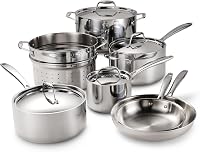
The Cuisinart Chef's Classic 11-Piece Stainless Set includes covered pans, skillets, an 8-quart stockpot and a steamer insert. Its stainless steel cooking surface suits cooks who want cookware without a nonstick coating.
Food sticking to stainless steel does not by itself mean the pan is worn out. Our guide to using stainless steel cookware without sticking explains the basics.
How can you make cookware last longer?
Follow each pan’s care and heat limits, and clean it in the way its brand recommends. These steps reduce avoidable wear, though they cannot prevent every coating from wearing over time.
Check stove compatibility before buying, since a mismatch can keep a pan from working on your cooktop. If you use induction, see how to tell if a cookware set works on induction.
For help choosing a set around material, piece count and stove type, read how to choose a cookware set. The complete cookware sets buying guide covers the broader choices.
What should you consider before replacing a set?
Replace cookware based on condition and fit, rather than age alone. A set may still serve you well if its pieces are intact and work for the meals and stove you have.
Before buying, consider whether you need a full assortment or only one replacement pan. Compare material, stove compatibility, care instructions and the pieces included, then see what comes in a 10, 12 or 17-piece cookware set to understand how set counts can differ.
Choose cookware by condition, material and care
How long cookware sets last depends on the condition of each piece, so keep sound pans and replace those with damage or lasting performance problems. When several pieces wear out, choose a new set by matching its material and care needs to your routines.
Choose stainless steel if avoiding a coating that wears away is your priority, or coated cookware if you prefer nonstick food release and will follow its care limits. Use the buying help and care guide to plan your next steps.
Frequently asked questions
How long should a cookware set last?
Cookware sets can last from a few years to decades, depending on material, use and care. Stainless steel can remain useful while its body and handles stay sound, while nonstick coatings can lose food release sooner, so check each pan for damage and follow its care instructions.
When should I replace a nonstick pan?
Replace a nonstick pan when its coating is peeling, flaking or deeply scratched, or when food release stays poor after proper cleaning and care. Stop using a damaged piece and follow the brand’s replacement guidance, checking the handle and base as well as the cooking surface.
Does stainless steel cookware last longer than nonstick?
Stainless steel often lasts longer because it has no nonstick coating to wear away. Its useful life still depends on construction, use and care, so check the handles, base and cooking surface for damage rather than assuming every stainless steel pan will last a set number of years.
Can you replace one pan instead of a whole set?
Yes, replacing one worn pan can make sense if the rest of the set is in good condition. Check that a replacement has a useful size and works with your stove, then compare its care needs with the pieces you already own.