How to Choose a Cookware Set: Material, Pieces, Price
Choose cookware by matching its material and stove fit to your cooking, then pick a set with the pieces you will use and care for. Compare the total set, not just the piece count.
On this page (6 sections)
Choose cookware by matching its material and stove fit to your cooking, then pick a set with the pieces you will use and care for. A larger set is only useful when its pans, pots and lids fit your meals and storage space.
Start with the meals you make most: if you often sear or brown, look at stainless steel; if easy food release matters most, compare nonstick options. Then confirm stove compatibility, piece mix, oven limits and cleanup needs.
For a broad overview of set types, start with our complete cookware set buying guide. This guide narrows the decision to material, set size and practical fit.
How do I choose cookware material?
Choose cookware material by the cooking tasks you do most and the care routine you can manage. Stainless steel is a common choice for browning and searing, while nonstick surfaces are designed for easier release and cleanup.
Ceramic-coated sets are another nonstick option, and hard-anodized aluminum is often paired with a nonstick interior. These labels describe different constructions, so check the specific features and care directions rather than assuming every set in a category cooks the same way.
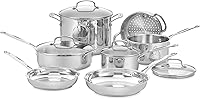
The Calphalon Classic 10-Piece Stainless Set has an impact-bonded aluminum base and stainless steel construction. It includes 8-inch and 10-inch fry pans, a 6-quart stockpot with a cover and tempered glass lids for its covered pieces.
The Rachael Ray Cucina Hard-Anodized 12-Piece Set combines hard-anodized aluminum with a nonstick interior. Its 12 pieces include saucepans, a stockpot, fry pans, a sauté pan and utensils.
The Carote 25-Piece Ceramic Set pairs aluminum with a ceramic nonstick coating. It includes 3 frying pans, 3 saucepans, a sauté pan, a stockpot, detachable handles and pan protectors.
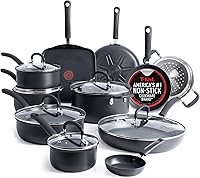
The T-fal Signature Nonstick 12-Piece Set uses a nonstick interior and includes 2 fry pans, a griddle, saucepans, a Dutch oven and utensils. It works with all cooktop types except induction.
For more detail on the trade-offs, see ceramic vs stainless steel cookware. If you lean toward ceramic, our guide to ceramic cookware labels and safety explains what those labels do and do not tell you.
Which cookware works with your stove?
The right set must match your cooktop, and induction deserves a separate check. A pan generally needs a magnetic base to work with induction, so confirm compatibility for the exact set before buying.
The Calphalon Classic 10-Piece Stainless Set works with induction, gas, electric and glass stovetops. The Carote 25-Piece Ceramic Set also works with induction, gas, electric and ceramic stovetops.
The Rachael Ray Cucina Hard-Anodized 12-Piece Set works with electric, glass-ceramic and gas cooktops, and the T-fal Signature Nonstick 12-Piece Set excludes induction. If your kitchen has induction, the Calphalon and Carote sets are the compatible examples here.
Our guide to checking cookware for induction walks through the signs to look for. Stove fit can rule out a set before piece count or finish matters.
How many pieces do you need?
Choose the piece count by listing the vessels you actually need, then checking what the set includes. A count can include lids, utensils or accessories, so it does not equal the number of pots and pans.
For a basic kitchen, you may want at least 1 frying pan, 1 saucepan and a larger pot. If you cook several dishes at once, a second pan or another saucepan can help, but duplicate sizes may go unused.
The Calphalon Classic 10-Piece Stainless Set includes 6 cooking vessels and 4 covers. The Rachael Ray Cucina Hard-Anodized 12-Piece Set includes 2 saucepans, a stockpot, 2 frying pans, a sauté pan, 4 lids and 2 utensils.
The Carote 25-Piece Ceramic Set includes universal lid coverage, 2 detachable handles, utensils and pan protectors alongside its pots and pans. The T-fal Signature Nonstick 12-Piece Set includes a griddle and utensils, so compare the actual contents with what you want in your kitchen.
Our guide to what comes in common cookware set sizes breaks down how counts can be assembled. For help choosing vessel dimensions, see what size pots and pans you need.
What should you check beyond material and count?
Check stove compatibility, oven limits, cleanup and storage before you settle on a set. These details affect whether the cookware fits your routines after it reaches your kitchen.
- Stove fit: Confirm the set supports your cooktop, especially induction.
- Oven use: Match the temperature limit to your recipes: 450°F for the Calphalon Classic 10-Piece Stainless Set, 400°F for the Rachael Ray Cucina Hard-Anodized 12-Piece Set and 350°F for the T-fal Signature Nonstick 12-Piece Set.
- Cleanup: All 4 sets support dishwasher cleaning; the Carote 25-Piece Ceramic Set also supports hand washing.
- Storage: Count the handles, lids and accessories that need a place. The Carote 25-Piece Ceramic Set has detachable handles designed to save storage space when stacked.
- Piece mix: Check whether the set has the frying pans, saucepans and larger pot you use most.
A cookware set can be oven-safe while still having a lower limit than your recipe needs. Read what oven-safe cookware limits mean before using a pan in the oven.
How should price affect your choice?
Set a budget after you decide what material and pieces you need. Compare sets with similar useful contents and stove compatibility, since a higher piece count can include accessories you may not use.
Compare current offers when you are ready to buy. A lower-cost set may cover your daily cooking, while spending more makes sense only if the extra pieces, materials or care features match your priorities.
Think about the cost per useful pan, not the cost per item in the box. A set with multiple utensils is less valuable to you if you already own them, while a spare frying pan may be useful if you cook for several people.
How to choose cookware for your kitchen
Choose stainless steel for browning and searing, or nonstick if easy release and cleanup lead your decision. A ceramic-coated set is another nonstick option if its stove compatibility, pieces and care directions suit your kitchen.
Before deciding, match the useful pans to your regular meals and storage space. Use our complete cookware set buying guide to compare the options against your stove, oven needs and budget.
Frequently asked questions
How do I choose cookware for my stove?
Start with your cooktop and confirm that the set supports it, especially if you have induction. The Calphalon Classic 10-Piece Stainless Set and Carote 25-Piece Ceramic Set work with induction, while the Rachael Ray Cucina Hard-Anodized 12-Piece Set and T-fal Signature Nonstick 12-Piece Set exclude it.
Is stainless steel or nonstick better for a first cookware set?
Stainless steel suits cooks who want pans for browning and searing and are willing to learn temperature and oil control. Nonstick can make food release and cleanup easier, so choose based on the meals you make most and the care instructions you can follow.
How many pieces should a cookware set have?
Pick by the pots, pans and lids you will use, not the headline piece count. Count each useful cooking vessel, then check whether lids, utensils and detachable handles are included in the total; our guide to cookware set sizes explains what different counts can contain.
Should I buy a cookware set or individual pans?
A set can make sense if you need several matching pieces at once and will use most of them. Buy individual pans if you only need to replace one item or want to mix materials and sizes, and compare the included pieces against your current kitchen before deciding.