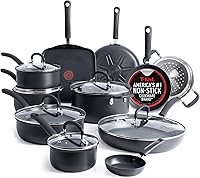
What Size Pots and Pans Do You Need?
Most homes need an 8- or 10-inch skillet, a 1- to 3-quart saucepan, and a 5- to 8-quart pot. Choose larger pieces for batch cooking and smaller ones for one or two servings.
On this page (8 sections)
- What size pots and pans do I need for everyday cooking?
- How do you choose pot and pan sizes for your household?
- Which skillet size is right for your meals?
- What saucepan capacity should you pick?
- How large should a stockpot be?
- Should you choose a set or buy individual pieces?
- How do you make sure cookware fits your stove and cabinets?
- Choose sizes around the meals you make most
Most homes need an 8- or 10-inch skillet, a 1- to 3-quart saucepan, and a 5- to 8-quart pot. Choose each size based on how many people you cook for, the meals you make, and the space available in your kitchen.
A larger set isn't automatically more useful. The right pieces are the ones you'll reach for often and can store without crowding your cabinets.
What size pots and pans do I need for everyday cooking?
For everyday cooking, start with one skillet, one saucepan and one larger pot. A 10-inch skillet, 2-quart saucepan and 6-quart pot cover many basic tasks.
An 8-inch skillet works well for eggs or a small portion, while a 10-inch pan gives food more room. A 12-inch skillet suits larger batches, but check that its base fits your burner's recommended pan size.
For saucepans, 1 quart is a small option for warming or melting, 2 quarts suits side dishes and small batches, and 3 quarts gives more room for grains, vegetables or pasta.
How do you choose pot and pan sizes for your household?
Choose sizes by the portions you cook most often, not just the number of people in your home. A 2-quart saucepan may work for a couple, while a household that cooks extra portions may prefer a 3-quart one.
For a family meal, consider a 10- or 12-inch skillet and a 6- to 8-quart pot, depending on your recipes. If you usually cook one or two servings, smaller pans can be easier to handle and store.
Think about leftovers, too. If you often make soup or cook ahead, a larger pot earns its cabinet space; if you rarely make big batches, it may not.
Which skillet size is right for your meals?
An 8-inch skillet suits small servings, a 10-inch skillet handles many everyday meals, and a 12-inch pan offers more cooking room. The best fit depends on your portions and the burner beneath it.
A 10-inch skillet is a useful middle size for sautéing vegetables, cooking a few eggs or making a meal for one or two. A larger skillet can hold more food in one layer, but it also needs more room on the stove and in storage.
The Cuisinart Chef's Classic 7-Piece Stainless Set includes a 10-inch skillet along with two saucepans and an 8-quart stockpot.
If you're choosing among larger sets, our cookware set sizes guide explains how piece counts can include lids and utensils as well as pots and pans.
What saucepan capacity should you pick?
A 2-quart saucepan is a practical everyday size for small batches, while a 3-quart pan allows more room for side dishes and larger portions. A 1-quart pan is useful for small jobs but may feel limiting as your main saucepan.
Many sets include two saucepan sizes so you can match the pan to the task. The T-fal Ultimate Hard Anodized 17-Piece Set includes 1-, 2- and 3-quart covered saucepans, which gives you options for small and larger batches.
If you usually cook only for one or two people, the 1- and 2-quart sizes may see the most use. For larger portions or more leftovers, reach for a 3-quart saucepan.
How large should a stockpot be?
A 5- to 8-quart pot works for many household meals, while bigger batches may call for a larger pot. Consider what you cook, how much you make at once and where the pot will live between meals.
An 8-quart stockpot is a roomy choice for soup or pasta. The Cuisinart Chef's Classic 7-Piece Stainless Set pairs one with a 1.5-quart saucepan, a 3-quart saucepan and a 10-inch skillet.
A smaller household may not need a stockpot this large every week. If cabinet space is tight, compare the included capacities with your usual recipes before you choose a set.
Should you choose a set or buy individual pieces?
A set can cover several common cooking tasks at once, while individual pieces let you choose only the sizes you need. Think about which option fits your kitchen and avoids duplicate pans.
The T-fal Signature Nonstick 12-Piece Set includes 7.75- and 11-inch frypans, a 10.25-inch griddle, 1- and 2-quart covered saucepans, and a 5.5-quart covered Dutch oven. Its 12-piece count includes lids and 3 utensils.
For a broader look at materials and what set pieces mean, see our complete cookware sets buying guide.
How do you make sure cookware fits your stove and cabinets?
Check the pan's base diameter against your burner's recommended pan sizes, then check its full width and height against your storage space. A wide pan can crowd nearby burners, and a tall stockpot can be hard to store in a low cabinet.
Count the pots and pans you'll use, since set totals can include lids and utensils. The Cuisinart Chef's Classic 10-Piece Stainless Set includes 8- and 10-inch skillets, covered 1.5- and 3-quart saucepans, a covered 3.5-quart sauté pan and a covered 8-quart stockpot.
The same set works on gas, electric and glass cooktops and is induction-ready. For help checking stove compatibility, read how to tell if cookware works on induction.
Choose sizes around the meals you make most
Choose your pot and pan sizes by your usual portions and available space. Pick a larger skillet and stockpot if you often cook for a group or make leftovers.
For a smaller kitchen or smaller servings, prioritize compact pans you'll use often. Once you've chosen your sizes, compare materials and included pieces in how to choose a cookware set.
Frequently asked questions
What size pots and pans do I need for a family of four?
A family of four can start with a 10- or 12-inch skillet, a 2- or 3-quart saucepan, and a 6- to 8-quart stockpot. Choose based on your usual portions, and check that the pieces fit your burners and storage space.
Is a 10-inch or 12-inch frying pan better?
A 10-inch frying pan suits smaller portions and takes less storage space, while a 12-inch pan gives more room for larger batches. Choose based on the portions you cook most often, the usable burner space on your stove and where you'll store it.
What size saucepan is best for everyday use?
A 2-quart saucepan works for small batches, reheating and side dishes, while a 3-quart pan gives more room for grains or vegetables. If you regularly cook for one, a 1- or 2-quart pan may be enough for your usual portions.
Do I need a large stockpot?
A 6- to 8-quart stockpot is useful for soup, pasta and larger batches, but it can take up significant cabinet space. If you rarely cook for a crowd or make stock, a smaller pot may cover your usual meals and be easier to store.